
Time Is Running Out: A Conversation on Healthcare's Looming Crisis
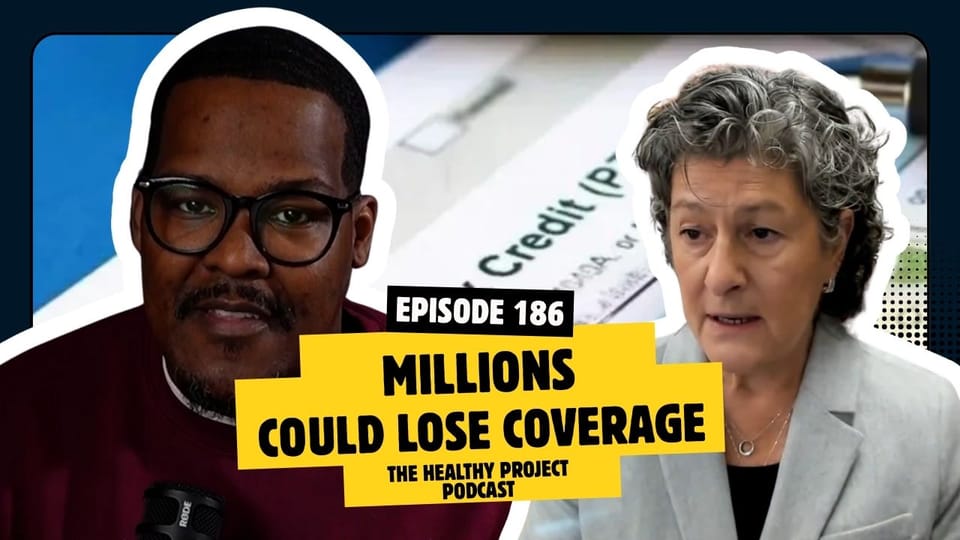
When Sister Mary Haddad last joined us in June, she warned about the devastating impact of Medicaid cuts that would affect 10 million Americans. Now, as we approach the end of 2025, that warning has become reality—and another crisis looms on the horizon.
In our latest episode, the President and CEO of the Catholic Health Association returns with an urgent message: without Congressional action, 4.2 million more working Americans will lose health coverage when enhanced premium tax credits expire on December 31st. For millions more, healthcare costs will skyrocket at a time when families are already struggling.
The Perfect Storm
The situation Sister Mary describes is a convergence of policy failures that threatens to destabilize healthcare access across the country:
The July cuts to Medicaid are already forcing 10 million people out of coverage. The expiring tax credits will push millions more into the ranks of the uninsured. Telehealth flexibilities remain in temporary limbo, extended only through January 2026. And rural hospitals, already operating on razor-thin margins, face potential closures and service reductions.
"We're at the precipice of a looming healthcare crisis in this country," Sister Mary tells us plainly. "And it must be addressed now."
The Human Cost of Policy Inaction
During our conversation, Sister Mary repeatedly brought the discussion back to what matters most: people. Behind every statistic is a family trying to balance rent, utilities, food, and healthcare. Behind every hospital closure is a community left without access to care.
She paints a vivid picture of what happens when coverage disappears. Families delay care until they're desperately sick. Emergency departments become overwhelmed with people seeking primary care—the most expensive entry point into the healthcare system. Rural residents drive hours for basic services, sometimes staying in hotels near hospitals because the journey is so long.
In one striking example from South Dakota, Sister Mary describes hospitals surrounded by hotels—not for tourists, but for patients who must travel so far for care that they need a place to stay overnight.
When Emergency Care Becomes Primary Care
One of the most sobering moments in our conversation comes when Sister Mary explains the cascading effects of coverage loss on hospital emergency departments.
"Emergency departments are the most expensive part of a hospital system," she explains. When people lose insurance and can't access primary care, they turn to ERs as their last resort. But by then, they've already delayed care. They're sicker than they would have been. The acuity is higher. The costs are greater.
And by federal law, everyone who presents at an emergency room must be assessed, triaged, and treated—regardless of ability to pay. For hospitals already struggling financially, this creates an impossible situation.
The Telehealth Lifeline
The conversation also highlights a less-discussed but equally critical issue: the uncertain future of telehealth services.
While COVID brought telehealth into the spotlight, Sister Mary reminds us that it's been core to healthcare delivery for years—especially in rural communities. Today, it's a lifeline for millions who cannot easily travel to appointments.
Yet Congress continues to extend these flexibilities only temporarily, creating what Sister Mary calls "a very frustrating" cycle of instability. Healthcare systems can't plan effectively. Patients don't know if their access will continue. And the back-and-forth continues.
"These temporary extensions really aren't helpful," she says. "We have to make them permanent."
A Moral Framework for Healthcare
Throughout our discussion, Sister Mary grounds the policy debate in a deeper moral framework. Drawing on Catholic social teaching, she frames healthcare access not as a political preference but as inseparable from human dignity and the common good.
"These challenges are not financial solely," she emphasizes. "These challenges are fundamentally moral challenges, moral issues, because we believe that every person is made in the image of God and therefore has inherent dignity."
This perspective—that healthcare is a fundamental human right—drives the Catholic Health Association's advocacy work. It's why they continue pushing Congress to act, even when the political landscape seems intractable.
What Needs to Happen Now
With roughly six weeks between mid-November and year's end, the window for Congressional action is closing rapidly. Sister Mary is clear about what's needed: lawmakers must extend the premium tax credits before they expire.
Senate leadership has agreed to bring up a separate bill in December, but details remain vague. The House hasn't committed to a vote. Meanwhile, families are already seeing "sticker shock" during open enrollment as they preview what coverage will cost without the enhanced subsidies.
If Sister Mary could speak directly to lawmakers, her message is simple: "The impact this has happened is not on our budgets, it's on people."
Beyond the Immediate Crisis
Even as we focus on the urgent need for Congressional action, Sister Mary doesn't shy away from a harder truth: the American healthcare system is fundamentally broken.
"We have a very fragmented system of care, a very fragmented system of financing healthcare," she tells us. "We have kicked the can down the road for years."
Long-term solutions require strengthening Medicaid, Medicare, marketplace insurance, and employer-sponsored coverage. They require investment in primary care physicians who are "the backbone of the healthcare delivery system." They require focus on prevention and well-being.
But most of all, they require something that's been missing: providers, payers, and government coming together to create a just healthcare system.
"The external pressures are such with dwindling resources that what we currently have cannot sustain us for the long haul," Sister Mary warns. "We have to change the system of care. And we have a responsibility to do that."
Hope as Action
Near the end of our conversation, I asked Sister Mary the same question I posed in June: what gives her hope?
Her answer, drawn from her recent reading on Pope Francis and the Year of Jubilee, reframes hope itself. Hope isn't something nebulous or abstract, she explains. It's not something we simply aspire to.
"Hope is actually concrete actions," Sister Mary says. "Hope is something we do. And we do it because we believe in life and we believe in life for everyone."
This understanding of hope—as tangible, as embodied in daily commitment to the common good—feels particularly powerful in this moment. It refuses despair while acknowledging reality. It demands engagement rather than passive waiting.
What You Can Do
Sister Mary's call to action is straightforward: get educated, know the facts, and speak up.
Visit the Catholic Health Association's website at chausa.org to learn more about these policy issues and their impact. Then reach out to your members of Congress. Let them know that healthcare access matters to you, your neighbors, and your community.
"Our government is only as good as our engagement with the populace," Sister Mary reminds us. "So I think it's very important that people speak out."
In a political environment that often feels overwhelming and unchangeable, this is something concrete we can do. We can learn. We can speak. We can act.
Because, as Sister Mary powerfully articulates throughout our conversation, this isn't really about budgets or policy mechanisms or political wins and losses.
It's about people. It's about dignity. It's about the kind of society we choose to build together.
Take Action: Visit chausa.org to learn more and contact your representatives in Congress.